Closed-Cell Spray Foam for a Metal Shop in Cleveland, TX
When the owner of this metal shop in Cleveland, Texas first called Weeks Spray Foam, the building had been sitting uninsulated for years. The galvanized steel walls and bare ceiling did nothing to stop the East Texas heat — and every summer, the space became impossible to use. Condensation dripped from the ceiling during temperature swings, tools left inside showed rust from the humidity, and the cost of running any kind of cooling was prohibitive without an air seal in place.
This is one of the most common problems we see with metal building insulation across our service area. Metal conducts heat aggressively. Without insulation, a metal shop becomes a greenhouse — absorbing radiant heat through the roof and radiating it back into the space well into the evening. The result is a building that’s functionally useless for a significant portion of the year.
Why Closed-Cell Foam Was the Right Choice Here
For this shop, closed-cell spray foam insulation was the clear solution. Unlike fiberglass batts or open-cell foam, closed-cell creates a completely rigid, airtight barrier that bonds directly to the metal substrate. It doesn’t sag, shift, or leave gaps at seams — and it handles the condensation problem at the source by acting as a vapor barrier, not just an insulator.
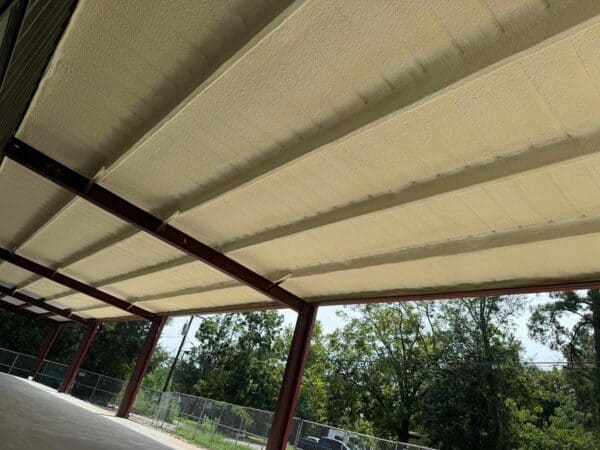
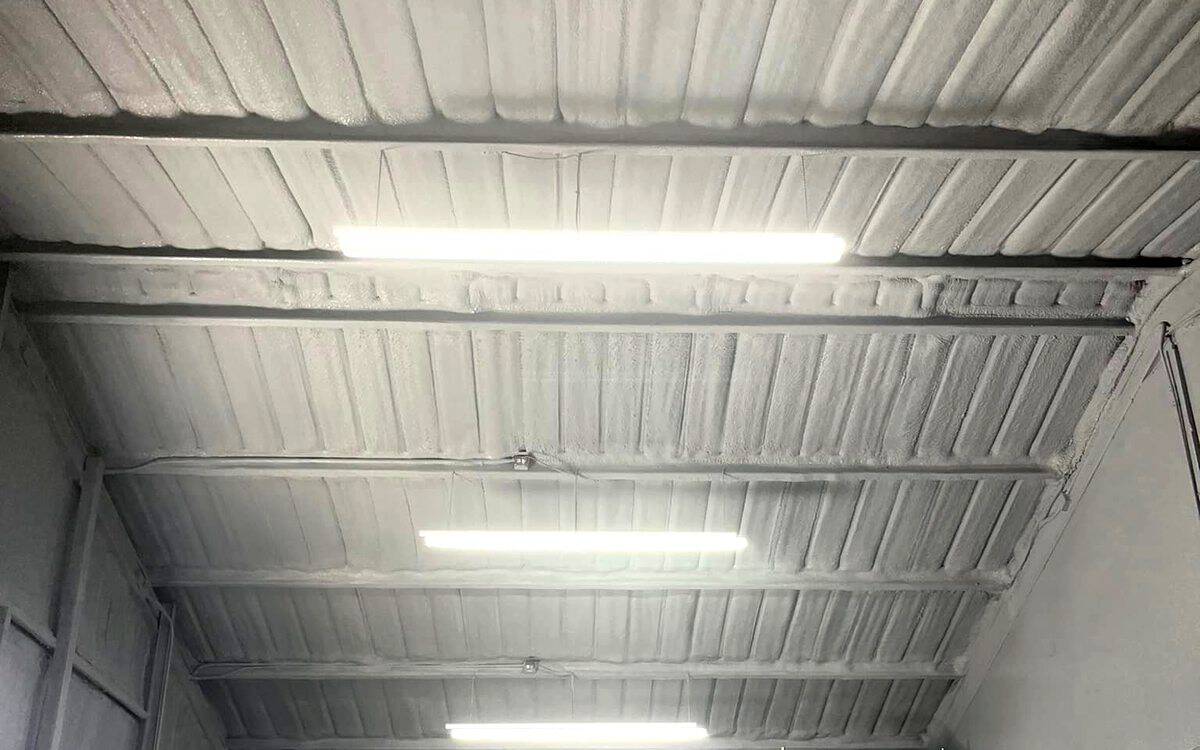
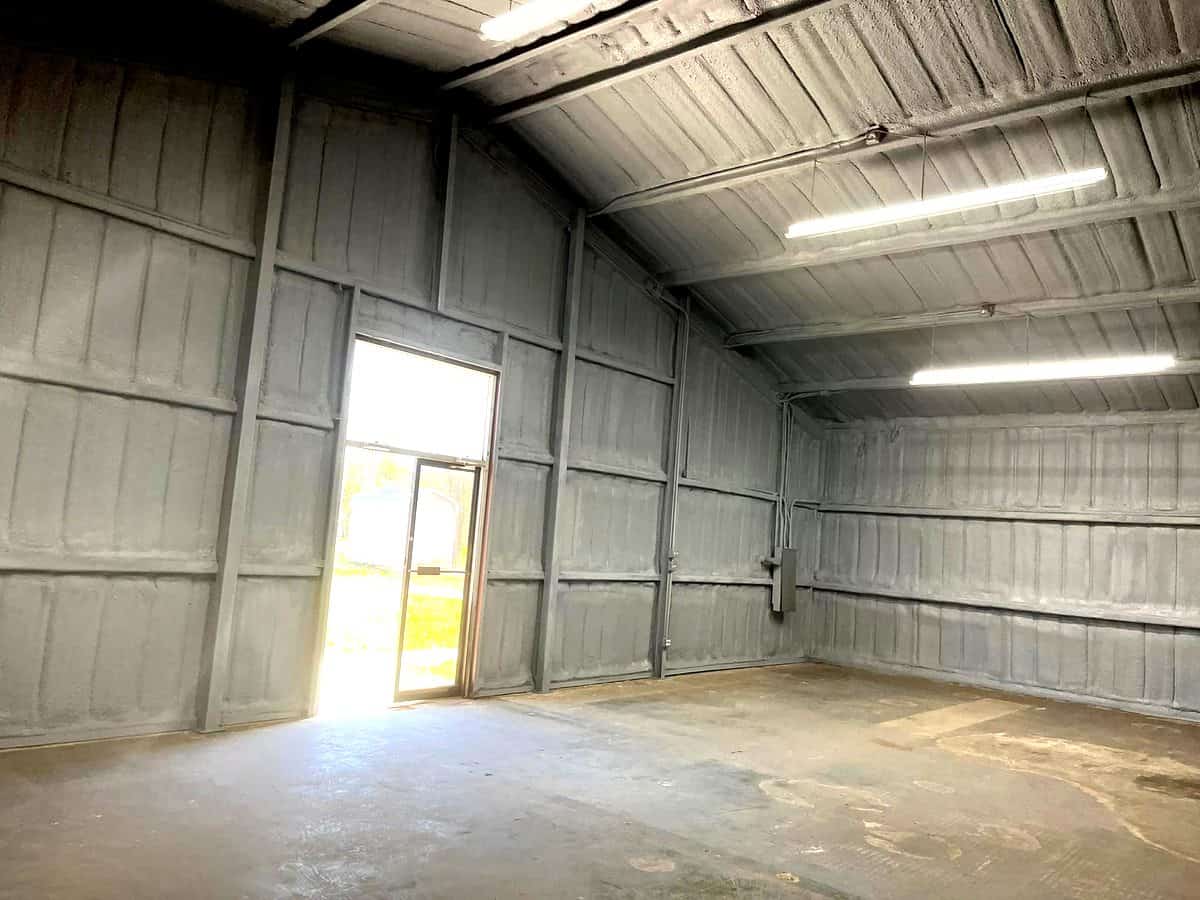
The gray color you see in the photos is characteristic of the particular closed-cell product used on this job. It’s not a coating — it’s the foam itself. Some closed-cell products cure to a cream or yellow finish; others, like this one, come out gray. The performance is identical regardless of color.
We applied approximately two inches across the walls and ceiling, which brings the building to roughly R-13 — a significant thermal barrier for a structure that previously had none. Combined with the air sealing effect, this transforms the building’s energy profile entirely.
What the Owner Was Dealing With Before
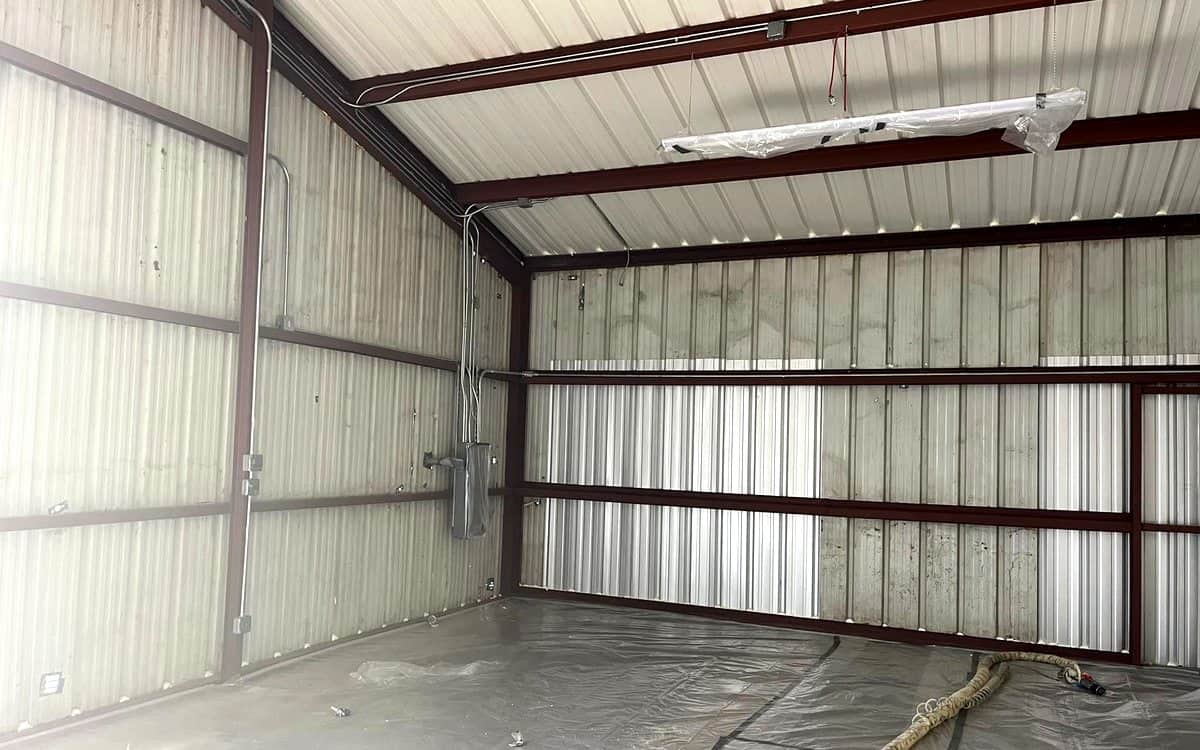
The before photos tell the story clearly. Bare corrugated galvanized panels, exposed steel framing, no vapor control of any kind. On a summer afternoon in Cleveland, TX, that building was storing heat like a Dutch oven. The interior temperature would routinely exceed the outdoor temperature by 15–20 degrees once the steel panels absorbed a full day of sun.
Condensation was the secondary problem. Every time cooler air moved through the space — whether from a door opening, a fan running, or a drop in overnight temperature — moisture would form on the cold metal surfaces. Over time, that leads to rust on tools and equipment, degraded flooring, and a generally damp environment that’s hard to work in and hard on anything stored inside.
The Transformation
After the foam was applied, the difference was immediate. The rigid closed-cell layer stops heat transfer through the walls and ceiling. The airtight seal eliminates the convective heat gain that comes from air moving in and out of gaps in the building envelope. And the vapor barrier built into the closed-cell foam means condensation is no longer an issue — the metal surfaces never get cold enough to reach the dew point because the foam separates them from the interior air.
For projects like this, we typically see the interior temperature during peak summer drop by 20–30 degrees compared to the uninsulated baseline, even before any mechanical cooling is added. Adding a mini-split system after insulating dramatically reduces the tonnage required to condition the space, which saves significantly on equipment cost and ongoing energy bills.
Metal Shops and Barndominiums Throughout the Cleveland and North Houston Area
Cleveland, TX sits in the heart of a region where metal buildings are everywhere — shops, barndominiums, equipment storage, and commercial facilities. We work on commercial spray foam projects and residential metal structures throughout this corridor, from Cleveland and Coldspring down through Conroe and into the North Houston area.
If you have a barndominium insulation project, a shop that’s become unusable in summer, or a metal building of any kind that needs to be made workable — the process is the same and the results are consistent.
Get a free estimate from Weeks Spray Foam and we’ll walk you through what the right system looks like for your specific building.