
Crawl Space Insulation
Spray Foam Crawl Space Insulation and Encapsulation in East Texas & North Houston
Ground moisture infiltrating through an East Texas crawl space affects air quality, floor temperature, and wood framing throughout the entire home above it. Spray foam encapsulation stops the problem at the source.
Get A Free Estimate
What's actually happening in your crawl space — and how it's affecting your home
East Texas has a substantial stock of pier-and-beam homes built with vented crawl spaces — a design based on the idea that outdoor air moving through vents would carry moisture out. In an arid climate, this works adequately. In East Texas, it does the opposite.
The high humidity of North Houston and East Texas means that outdoor air entering the crawl space through vents carries significant moisture load. That moisture condenses on the cooler wood framing of the floor assembly above, creating chronic elevated moisture content in the joists, subfloor, and sill plates. Over years, this leads to wood rot, mold growth in the crawl and in the living space above it, pest infiltration through softened framing, and persistent musty odors in the house that no amount of cleaning resolves.
The cold floors that East Texas pier-and-beam homeowners deal with in winter trace back to the same source — cold air moving through the open crawl space and through the un-insulated subfloor into the living space above. The house loses heat through the floor the same way a poorly insulated attic loses it through the ceiling.
Spray foam encapsulation — closed-cell foam on the interior face of the crawl space walls, with the vents sealed — stops both problems by converting the crawl from an uncontrolled outdoor-air space into a semi-conditioned, moisture-stable zone.

Closed-cell spray foam applied to a crawl space in Houston TX
Six ways spray foam crawl space encapsulation improves your East Texas home
A vented crawl space in East Texas is a direct path for ground moisture, cold air, mold, and pests into the floor assembly above it. Spray foam encapsulation seals the foundation walls and rim joists, breaking that cycle before it reaches your framing, your floors, or your indoor air quality.
Stops Ground Moisture at the Foundation
Wall Spray foam on the interior face of the crawl space foundation walls creates a physical barrier between the ground moisture outside and the wood framing of your floor assembly inside. The moisture cycle that drives rot and mold stops at the wall.
Eliminates Cold Floors in Winter
Cold floors in pier-and-beam homes are caused by cold outdoor air moving through the open crawl space and into the floor assembly from below. An encapsulated crawl space maintains a temperature closer to the conditioned space above — floors warm up significantly.
Improves Indoor Air Quality Throughout the Home
Air in a home with a vented crawl space moves upward through the floor — carrying mold spores, ground moisture, pest debris, and volatile organic compounds into the living space. Encapsulation dramatically reduces this stack effect, improving air quality in every room above the crawl.
Protects Framing from Rot and Mold
Wood framing that stays above 19% moisture content is at risk for rot fungi. In a vented East Texas crawl space, framing frequently exceeds that threshold during humid seasons. Encapsulation stabilizes moisture content in the framing and stops the rot progression.
Reduces Pest Entry Points
Pests — termites, rodents, insects — enter crawl spaces through vents and gaps at the foundation wall. Spray foam at the foundation walls and rim joists seals these common entry points alongside the moisture management work.
Increases Living Space Comfort Year-Round
A stable crawl space means less temperature and humidity variation in the living space above. Rooms that run too cold in winter or too humid in summer often improve noticeably after crawl space encapsulation — without any changes to the HVAC system.
Crawl space encapsulation options compared - spray foam vs. vapor barrier only vs. fiberglass batts
East Texas homeowners are often presented with three options for crawl space moisture management. Here is how they compare on what actually matters for long-term performance.
| Feature | Spray Foam Encapsulation | Ground Vapor Barrier Only | Fiberglass Batts (Subfloor) |
|---|---|---|---|
| Stops wall air infiltration | Yes — foam seals all surfaces | No — walls still open | No |
| Controls wall moisture | Yes | Ground only — walls still transmit | No |
| Insulates floor assembly | Yes (wall application also conditions crawl) | No | Yes — but falls and absorbs moisture |
| Seals rim joists | Yes — included in scope | No | No |
| Reduces pest entry | Significantly | Minimally | No |
| Long-term durability | Permanent — does not degrade | Tears, shifts over time | Falls, absorbs moisture, fails |
| Improves living space air quality | Yes — stops stack effect | Partially | No |
Want more detail? → Is spray foam worth it in Texas? · Open-cell vs. closed-cell — full breakdown
Which crawl space insulation approach is right for your home?
There are two methods for spray foam crawl space work, and the right one depends on the crawl space geometry, your primary concern, and what access is available.
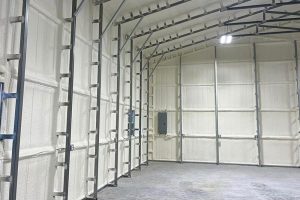
Foundation wall encapsulation — comprehensive moisture control
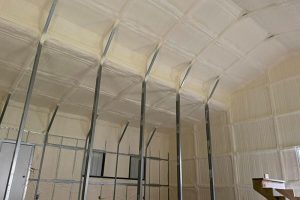
Subfloor application — targeted floor insulation
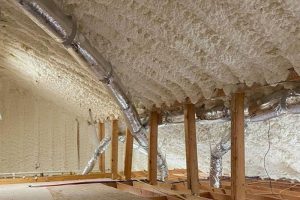
Rim joist sealing
Recent crawl space insulation jobs across East Texas and North Houston
A sample of crawl space encapsulation and subfloor insulation projects we’ve completed — pier-and-beam homes with moisture problems, cold floor complaints, and mold history across the region.
Sorry, we couldn't find any posts. Please try a different search.
Why East Texas homeowners choose Weeks for crawl space insulation
Crawl space work is done in tight, dirty, difficult conditions — which makes quality control harder and easier to cut corners on. We bring the same application standard to crawl spaces as to open attic and wall work: correct prep, correct product, full surface coverage, and documentation of what was done before we leave.
We Assess First
Crawl space conditions vary significantly — clearance, moisture history, existing framing condition, vent configuration. We assess all of it before we scope or quote anything.
Licensed & Insured Spray Foam Contractor
Fully licensed for crawl space spray foam applications throughout Texas.
We Include the Rim Joists
Rim joist sealing is a standard part of every crawl space scope — not an upsell. It's part of a complete job.
100+ Five-Star Reviews
Trusted by homeowners across East Texas and North Houston for crawl space work done correctly.
What East Texas homeowners say about our crawl space insulation work
EXCELLENT Based on 124 reviews
 Posted on Google
 Jimmie JonesThey did a great job good price . Thank youPosted on Google
 Steven StruthersAustin and his crew did a great job on our little barndo guest house! We will definitely use them for future projects.Posted on Google
 Adys MirabalHands down best in town! Very responsive, great price and great and quick work I would call them and refer my friends!Posted on Google
 John BenckensteinGreat work, would recommendPosted on Google
 EddieDid a great job insulating an add on at our Church "Hillister Assembly of God". I would definitely recommend them.Posted on Google
 Jennifer WellsI can’t say enough great things about Weeks Spray Foam! From the very first phone call to the final walkthrough, their team was professional, knowledgeable, and genuinely committed to doing the job right. They took the time to explain the entire process, answered all of my questions, and made sure I felt confident every step of the way. The quality of their work is outstanding — clean, precise, and completed on schedule. You can tell they take real pride in what they do. On top of that, their customer service is second to none. Friendly, responsive, and reliable — exactly what you hope for when hiring a contractor. If you’re looking for spray foam insulation done right, I highly recommend Weeks Spray Foam. You won’t be disappointed!Posted on Google
 bowman reynoldsWe absolutely love these guys! They spray all of our new builds great customer service short lead times and fast quality workPosted on Google
 Josh FulcherAfter being screwed around by another spray foam company, I reached out to Weeks and BOOM, 100% professional service, great quality of work and clean up, along with best in class customer service and price! Will certainly have them out again, for my next project!
A straightforward way to get the job done
Crawl space jobs start with a crawl space assessment — we go under the house, assess clearance, moisture conditions, and framing before scoping anything. Installation typically takes half a day to a full day depending on crawl space size and access conditions.
-
Request a Quote
Tell us about the building, the project type, and where the property is located. -
Review the Job
We look at the scope, building type, and insulation needs so we can recommend the right solution. -
Schedule the Work
We coordinate timing and keep the project moving as efficiently as possible. -
Install the Spray Foam
Our crew completes the work with a focus on quality, consistency, and long-term performance. -
Enjoy a Better-Performing Building
You get a tighter, more comfortable, more energy-efficient space built for Texas conditions.
How much does crawl space insulation cost in East Texas?
Crawl space encapsulation cost depends heavily on crawl space size, clearance, and access conditions. Foundation wall encapsulation on a standard 1,500 sq ft footprint typically runs $3,500–$8,000. Subfloor-only applications are priced per square foot of floor area foamed. Crawl spaces vary more than almost any other job type — site assessment is required before any firm number can be given. We don’t quote over the phone for crawl space work.
Crawl space footprint square footage
Wall encapsulation vs. subfloor vs. both
Crawl space clearance and access difficulty
Existing moisture damage requiring remediation
Vent sealing scope
Ground vapor barrier inclusion
Crawl space insulation service areas — East Texas, North Houston & the Lake Livingston region
We install crawl space insulation and encapsulation throughout East Texas and North Houston — with particular concentration in the Livingston, Huntsville, Liberty, Trinity, Lufkin, Diboll, and Woodville areas where pier-and-beam homes are most common. Not sure if we reach your area? Call (936) 433-7046.
Crawl space insulation FAQs — encapsulation, moisture & East Texas homes
Should I close the vents in my crawl space after spray foam encapsulation?
Yes — if you're doing a full wall encapsulation, the crawl space vents should be sealed as part of the project. An encapsulated crawl is designed to operate as a sealed semi-conditioned space, not a vented space. Leaving vents open after encapsulation defeats the moisture management purpose of the installation.
Will crawl space spray foam fix my cold floors?
In most cases — yes. Cold floors in pier-and-beam homes are primarily caused by cold outdoor air moving through the open crawl space and through the subfloor into the living space. Wall encapsulation stops that air movement and significantly warms the floors above within the first heating season after installation.
Do I also need a ground vapor barrier in the crawl space?
A ground vapor barrier is often combined with spray foam encapsulation. The foam on the walls stops air and moisture infiltration from the exterior; the ground barrier stops evaporation from the soil below. In wet areas or homes with elevated moisture history, we typically recommend both. We advise based on what we find during the site assessment.
Can crawl space spray foam stop the musty smell in my house?
If the musty smell is coming from the crawl space — which it usually is in vented East Texas pier-and-beam homes — yes. Encapsulation stops the stack effect that carries crawl space air into the living space above. Most homeowners report the odor improves significantly within a few weeks of encapsulation as the crawl space moisture stabilizes.
How long does a crawl space insulation installation take?
Half a day to a full day for most projects. Larger crawl spaces or ones with access challenges may take longer. We give you a specific timeline after the site assessment.