
Blown-In Insulation
Blown-In Attic Insulation in North Houston & East Texas
Blown-in insulation is the right call for attic floor R-value in homes without HVAC in the attic. We install it where it fits — and tell you honestly when spray foam is the better investment.
Get A Free Estimate
When blown-in insulation is the right choice — and when it isn't
Weeks Spray Foam is primarily a spray foam contractor. We offer blown-in insulation because there are genuine situations where it’s the right product — and we’d rather recommend the right product than sell you a more expensive one you don’t need.
Blown-in fiberglass or cellulose works well for one specific application: increasing R-value at the attic floor in a home where the ceiling plane is already air-sealed and no HVAC equipment is in the attic. In that scenario, blown-in is cost-effective and performs adequately for its intended purpose — adding R-value directly above the living space.
What blown-in doesn’t do, and what it’s frequently oversold as doing: it doesn’t air-seal anything, it doesn’t control vapor, it doesn’t protect HVAC equipment in the attic from 150°F heat, and it doesn’t stop moisture movement through the ceiling assembly. If any of those are the actual problem, spray foam is the right product.
We give you that assessment before we scope anything.
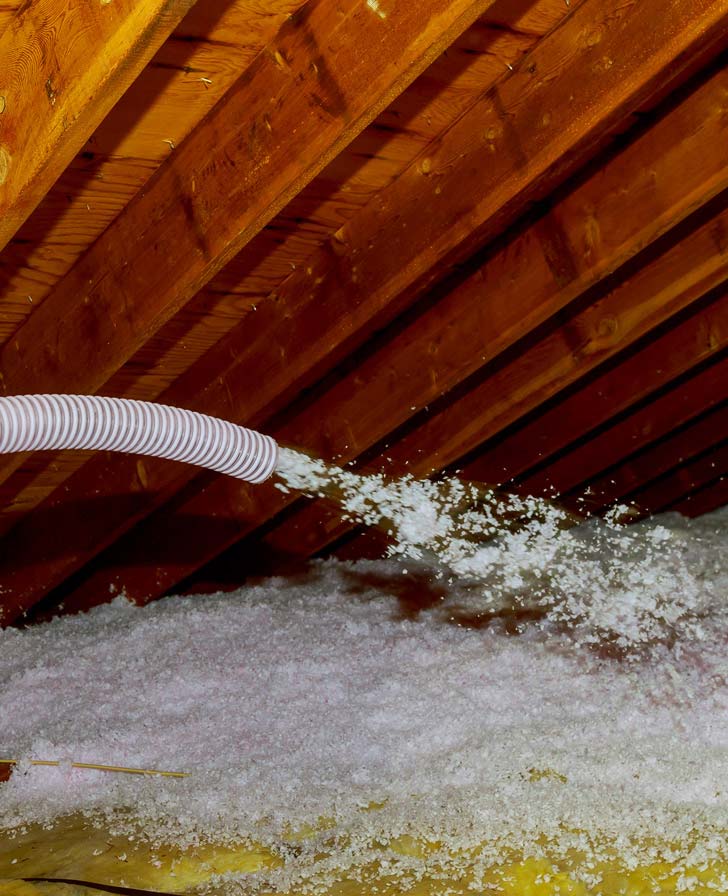
Blown-in insulation, Tomball, TX
When blown-in is the right product for your North Houston or East Texas home
Spray foam is the right product for most of what we do — but not every insulation problem needs it. For attic floors without HVAC equipment, under-insulated older homes, and existing wall cavities that can’t be opened, blown-in is the more practical and cost-effective solution. Here’s when we recommend it.
Lower Upfront Cost for Attic Floor R-Value
For the specific application of adding R-value to an attic floor in a home without HVAC in the attic, blown-in is significantly less expensive per square foot than spray foam. If the air sealing is already handled, the cost savings are real.
Fast Installation With No Demolition
Blown-in installs quickly in accessible attic spaces — no wall demolition, no framing preparation, no curing time. An attic floor topping on a standard home is often completed in a few hours.
Effective Topping for Under-Insulated Attics
Many older homes in North Houston and East Texas have attic floor insulation that has settled well below current code minimums. Blown-in on top of existing insulation brings the assembly up to code R-value efficiently.
Works Over Existing Batt Insulation
Blown-in can be installed over existing fiberglass batts that are in reasonable condition, adding R-value without removing what's there. This makes it the most practical retrofit option for straightforward R-value improvement.
Dense-Pack for Existing Wall Cavities
Dense-pack blown-in — installed under pressure into enclosed wall cavities through small access holes — can add insulation to existing walls without opening drywall. This is the right retrofit option for exterior walls in older homes where wall demo isn't practical.
Right-Sized for the Right Problem
Not every insulation problem needs spray foam. Blown-in solves the specific problem of inadequate attic floor R-value efficiently. Knowing the limits of a product and recommending it anyway is what honest contracting looks like.
Blown-in vs. spray foam — a side-by-side from a contractor who installs both
We sell and install both products. This comparison is not designed to sell you one over the other — it’s designed to show you where each wins so you can make the right call for your specific project.
| Feature | Blown-In (Fiberglass or Cellulose) | Closed-Cell Spray Foam |
|---|---|---|
| Upfront cost per sq ft | Lower — $0.75–$1.50 | Higher — $1.50–$3.00+ |
| Attic floor R-value improvement | Yes — cost-effective | Yes — higher R/inch |
| Air sealing | No — requires separate step | Yes — simultaneous with insulation |
| Vapor control | No | Yes — Class II retarder |
| Works for roofline / conditioned attic | No | Yes — correct product |
| Works in metal buildings | No — condensation risk | Yes |
| Settles over time | Yes — 10–20% over years | No — permanent R-value |
Want more detail? → Is spray foam worth it in Texas? · Open-cell vs. closed-cell — full breakdown
The scenarios where blown-in insulation is the correct recommendation
These are the situations where we recommend blown-in over spray foam — not because spray foam wouldn’t work, but because the cost-benefit math favors blown-in for these specific cases.
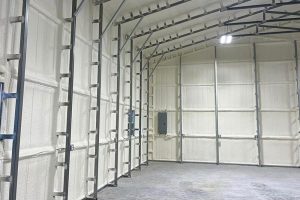
Attic floor — no HVAC in the attic
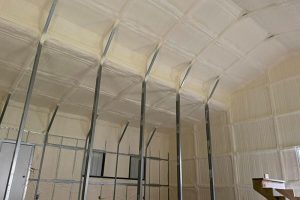
Topping off settled attic insulation
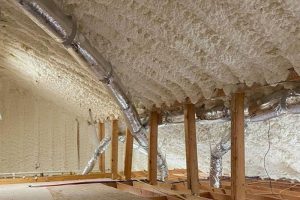
Dense-pack in existing wall cavities
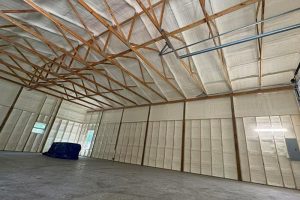
When spray foam doesn't make economic sense
Recent blown-in insulation jobs across North Houston and East Texas
A sample of attic floor and wall cavity projects we’ve completed — older homes brought up to code, under-insulated attics topped off, and dense-pack wall retrofits across the region.
Sorry, we couldn't find any posts. Please try a different search.
Why North Houston homeowners trust Weeks for honest insulation guidance
We install blown-in because some projects genuinely call for it. A contractor who only sells one product has an obvious interest in recommending that product regardless of fit. We give you the honest recommendation for your specific project — and if that recommendation is blown-in, you’ll get it installed correctly by a licensed contractor.
We Tell You Which Product Is Right
We don't default to spray foam on every job or steer you toward blown-in to save a sale. The product recommendation comes from what the project actually requires — not what we'd prefer to sell.
Licensed & Insured Insulation Contractor
Fully licensed for residential and commercial insulation work throughout Texas.
Free Estimates, No Pressure
We assess your attic, tell you what's there, and recommend the right scope. No pressure to upgrade to spray foam if blown-in is the correct call.
100+ Five-Star Reviews
Trusted by homeowners across North Houston and East Texas for insulation that solves the problem — whatever product that requires.
What customers say about working with Weeks Spray Foam
EXCELLENT Based on 124 reviews
 Posted on Google
 Jimmie JonesThey did a great job good price . Thank youPosted on Google
 Steven StruthersAustin and his crew did a great job on our little barndo guest house! We will definitely use them for future projects.Posted on Google
 Adys MirabalHands down best in town! Very responsive, great price and great and quick work I would call them and refer my friends!Posted on Google
 John BenckensteinGreat work, would recommendPosted on Google
 EddieDid a great job insulating an add on at our Church "Hillister Assembly of God". I would definitely recommend them.Posted on Google
 Jennifer WellsI can’t say enough great things about Weeks Spray Foam! From the very first phone call to the final walkthrough, their team was professional, knowledgeable, and genuinely committed to doing the job right. They took the time to explain the entire process, answered all of my questions, and made sure I felt confident every step of the way. The quality of their work is outstanding — clean, precise, and completed on schedule. You can tell they take real pride in what they do. On top of that, their customer service is second to none. Friendly, responsive, and reliable — exactly what you hope for when hiring a contractor. If you’re looking for spray foam insulation done right, I highly recommend Weeks Spray Foam. You won’t be disappointed!Posted on Google
 bowman reynoldsWe absolutely love these guys! They spray all of our new builds great customer service short lead times and fast quality workPosted on Google
 Josh FulcherAfter being screwed around by another spray foam company, I reached out to Weeks and BOOM, 100% professional service, great quality of work and clean up, along with best in class customer service and price! Will certainly have them out again, for my next project!
A straightforward way to get the job done
Blown-in jobs are typically the simplest scope we handle — attic assessment, confirmation that air sealing is handled (or we handle it first), and installation in a single visit. Dense-pack wall work involves more access preparation.
-
Request a Quote
Tell us about the building, the project type, and where the property is located. -
Review the Job
We look at the scope, building type, and insulation needs so we can recommend the right solution. -
Schedule the Work
We coordinate timing and keep the project moving as efficiently as possible. -
Install the Spray Foam
Our crew completes the work with a focus on quality, consistency, and long-term performance. -
Enjoy a Better-Performing Building
You get a tighter, more comfortable, more energy-efficient space built for Texas conditions.
How much does blown-in insulation cost in North Houston?
Blown-in fiberglass on an attic floor typically runs $0.75–$1.50 per square foot installed depending on product and required depth. Bringing a standard 2,000 sq ft attic floor to R-38 typically runs $1,500–$3,500. Dense-pack wall applications are scoped and priced by linear foot of wall cavity — contact us for an assessment. We provide a firm written estimate for every job.
Attic floor square footage
Existing insulation depth and condition
Required final R-value (code minimum R-38 for Climate Zone 2)
Dense-pack vs. open blow
Number of attic access points
Air sealing scope (if needed before blown-in)
Blown-in insulation service areas — North Houston, East Texas & the Lake Livingston region
We install blown-in insulation throughout North Houston and East Texas. Not sure if we cover your area? Call (936) 433-7046.
Blown-in insulation FAQs — attic floors, R-value & North Houston homes
Is blown-in insulation better than spray foam for a Texas attic?
It depends on what's in your attic. If you have no HVAC equipment in the attic and your goal is simply increasing R-value above your living space, blown-in on the attic floor is cost-effective and does the job. If you have an air handler, ductwork, or any HVAC in the attic — roofline spray foam is the correct product. Blown-in on the attic floor doesn't address the HVAC problem, and it's the HVAC problem that's costing most North Houston homeowners money.
How much blown-in insulation do I need to meet code in Texas?
Climate Zone 2 — which covers North Houston and most of East Texas — requires R-38 at the attic floor as code minimum. At R-2.5 to R-3.7 per inch for blown-in fiberglass, reaching R-38 requires approximately 10–15 inches of depth. We calculate the correct installed depth for your specific product during the estimate.
Does blown-in insulation settle over time?
Yes — fiberglass blown-in settles 10–20% over years. Cellulose settles more initially and then stabilizes. We install to a depth that accounts for settling, targeting the final settled R-value rather than the as-installed depth.
Can blown-in insulation be added on top of my existing attic insulation?
Yes, if the existing insulation is in reasonable condition — not wet, not heavily compressed, and not infested. We assess the existing material during the site visit and calculate the topping depth needed to bring the total to the target R-value.
What is dense-pack blown-in and when is it the right option?
Dense-pack blown-in is a technique for filling closed wall cavities — existing wall bays that are already enclosed by exterior sheathing and interior drywall — by drilling access holes and blowing insulation in under pressure. It's used for retrofit insulation on existing homes where opening walls isn't practical. It requires a site assessment to confirm the wall construction is compatible.