
Mineral Wool Insulation — North Houston & East Texas
Mineral Wool Insulation for North Houston & East Texas Homes and Buildings
Mineral wool — also called rock wool or stone wool — is a batt insulation product that outperforms fiberglass in fire resistance, moisture resistance, and sound control. It is the right product for fire-rated wall assemblies, party walls, sound separation applications, and any cavity where a better-performing batt is required without stepping up to spray foam. We install mineral wool insulation across North Houston and East Texas for residential and commercial projects.
Get A Free Estimate
What mineral wool insulation is — and where it outperforms fiberglass in Texas
Mineral wool insulation — manufactured from volcanic rock or slag from steel production — is a high-density batt product that delivers meaningfully better performance than standard fiberglass batts in three specific areas: fire resistance, moisture resistance, and sound attenuation. It is available in batts sized for standard framing cavities and installs using the same process as fiberglass.
Mineral wool does not melt or contribute fuel to fire — it maintains its structure at temperatures up to approximately 1,000°C (1,800°F), which is why it is specified for fire-rated wall assemblies in commercial and multi-family construction. It does not absorb water and maintains its R-value when exposed to moisture — a meaningful advantage over fiberglass in Texas’s humid climate. And its density — significantly higher than fiberglass — provides better sound attenuation between spaces.
Mineral wool delivers R-3.7 to R-4.2 per inch, which is slightly better than standard fiberglass batts. Like fiberglass, it does not provide air sealing — air moves through and around mineral wool batts just as it does with fiberglass. For applications where air sealing is critical, spray foam remains the superior product. See our full spray foam overview at /services/spray-foam-insulation/ for how the products compare.
We install mineral wool in the specific applications where its fire, moisture, and acoustic properties are the primary requirements — and we give you an honest comparison with fiberglass and spray foam so you can choose the right product for each assembly.

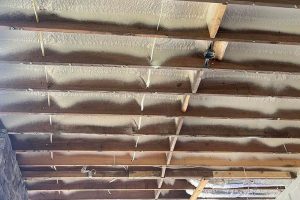
Mineral wool insulation applied to interior building near Diboll, TX
Where mineral wool insulation outperforms fiberglass for Texas residential and commercial projects
Mineral wool fills the gap between fiberglass batts — limited fire and moisture performance — and spray foam — excellent performance at higher cost. For specific applications, its properties make it the right choice without the cost of spray foam.
Superior Fire Resistance
Mineral wool is non-combustible and does not melt or drip in a fire. This makes it the specified product for fire-rated wall assemblies in commercial construction, multi-family buildings, and any application where building code requires a specific fire rating for the insulation product. Standard fiberglass batts have a lower melting point and contribute to fire spread under extreme conditions.
Better Moisture Resistance Than Fiberglass
Mineral wool does not absorb water and does not lose R-value when exposed to moisture. In Texas's humid climate — particularly in below-grade applications, exterior walls in high-humidity areas, and commercial assemblies with vapor drive — this property matters. Fiberglass that gets wet compresses, loses R-value, and can harbor mold. Mineral wool maintains its structure and thermal performance even if it gets wet.
Excellent Sound Attenuation
Mineral wool's density provides significantly better sound attenuation between spaces than standard fiberglass batts. For walls between a home theater and living areas, between multi-family units, between commercial tenant spaces, or between any two spaces where acoustic separation is a priority, mineral wool delivers meaningfully better performance than fiberglass at a moderate cost premium.
Slightly Higher R-Value Than Fiberglass
At R-3.7 to R-4.2 per inch, mineral wool delivers slightly better thermal resistance than standard fiberglass batts at equivalent cavity depth. This is not a dramatic difference — air sealing remains the bigger performance gap — but it is a genuine advantage in applications where every R-value point matters.
Dimensionally Stable and Easy to Install
Mineral wool batts hold their shape and do not compress at the edges the way fiberglass does — which means fewer voids and gaps at the framing members and around obstacles. This dimensional stability translates to more consistent installed R-value across the assembly compared to fiberglass, which often compresses at corners and around wiring and pipes.
No Itch, No Irritation
Mineral wool is generally considered less irritating to handle than fiberglass — the fiber structure is less likely to penetrate skin and cause itching during installation. For installers working in high volumes, this is a practical advantage that affects installation quality and efficiency.
Mineral wool vs. fiberglass vs. spray foam — choosing the right insulation for Texas
Three insulation products dominate residential and commercial batt applications in North Houston and East Texas. Here is how they compare across the performance categories that matter most for Texas construction.
| Mineral Wool | Fiberglass Batts | Spray Foam | |
|---|---|---|---|
| Fire resistance | Non-combustible | Moderate | Requires barrier |
| Sound attenuation | Excellent | Moderate | Excellent |
| Moisture resistance | Good | Poor | Excellent |
| R-value per inch | R-3.7–4.2 | R-2.9–3.8 | R-3.5–7 |
| Air sealing | None | None | Excellent |
| Upfront cost | Moderate | Lowest | Higher |
| Works in metal buildings | No | No | Yes |
Where we install open-cell spray foam across North Houston & East Texas
From new residential builds to light commercial interiors — open-cell spray foam performs wherever complete cavity fill, air sealing, and sound control are the priority across Conroe, Livingston, Cleveland, Huntsville, Liberty, and surrounding communities.
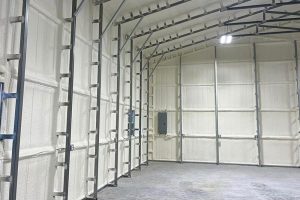
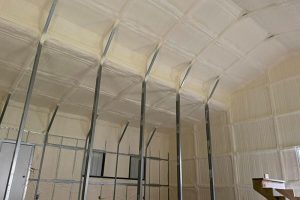
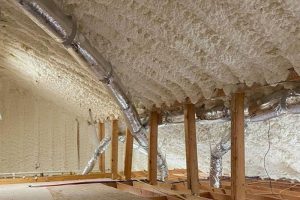
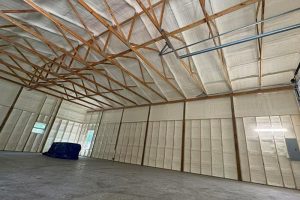

Recent mineral wool insulation projects in North Houston & East Texas
Insulation projects across the region — pulled directly from our project archive. Every job is linked to the full project page with photos, building type, and location details.
Sorry, we couldn't find any posts. Please try a different search.
Why North Houston builders and property owners choose Weeks Spray Foam for mineral wool insulation
Mineral wool is a niche product — most residential contractors default to fiberglass and most spray foam contractors do not offer it at all. We install mineral wool for the specific applications where its properties are required, and we give you an honest comparison with fiberglass and spray foam so you can make the right call for each assembly. We do not push products — we recommend the right one.
Licensed & Insured Insulation Contractor
Fully licensed for residential and commercial insulation work throughout Texas.
We Install All Three Products
Fiberglass, mineral wool, and spray foam — we install all three and recommend based on the application, not on what is most profitable for us to sell.
Free Estimates, No Pressure
We assess your project and recommend the right product for each assembly before any work begins.
100+ Five-Star Reviews
Trusted by homeowners, builders, and commercial property owners across North Houston and East Texas.
What customers say about working with Weeks Spray Foam
EXCELLENT Based on 124 reviews
 Posted on Google
 Jimmie JonesThey did a great job good price . Thank youPosted on Google
 Steven StruthersAustin and his crew did a great job on our little barndo guest house! We will definitely use them for future projects.Posted on Google
 Adys MirabalHands down best in town! Very responsive, great price and great and quick work I would call them and refer my friends!Posted on Google
 John BenckensteinGreat work, would recommendPosted on Google
 EddieDid a great job insulating an add on at our Church "Hillister Assembly of God". I would definitely recommend them.Posted on Google
 Jennifer WellsI can’t say enough great things about Weeks Spray Foam! From the very first phone call to the final walkthrough, their team was professional, knowledgeable, and genuinely committed to doing the job right. They took the time to explain the entire process, answered all of my questions, and made sure I felt confident every step of the way. The quality of their work is outstanding — clean, precise, and completed on schedule. You can tell they take real pride in what they do. On top of that, their customer service is second to none. Friendly, responsive, and reliable — exactly what you hope for when hiring a contractor. If you’re looking for spray foam insulation done right, I highly recommend Weeks Spray Foam. You won’t be disappointed!Posted on Google
 bowman reynoldsWe absolutely love these guys! They spray all of our new builds great customer service short lead times and fast quality workPosted on Google
 Josh FulcherAfter being screwed around by another spray foam company, I reached out to Weeks and BOOM, 100% professional service, great quality of work and clean up, along with best in class customer service and price! Will certainly have them out again, for my next project!
A straightforward way to get the job done
Mineral wool installation jobs are scoped based on the specific assembly, fire rating requirements, and acoustic targets. We assess the project, confirm product specification, and give you a firm number before we schedule.
-
Request a Quote
Tell us about the building, the project type, and where the property is located. -
Review the Job
We look at the scope, building type, and insulation needs so we can recommend the right solution. -
Schedule the Work
We coordinate timing and keep the project moving as efficiently as possible. -
Install the Spray Foam
Our crew completes the work with a focus on quality, consistency, and long-term performance. -
Enjoy a Better-Performing Building
You get a tighter, more comfortable, more energy-efficient space built for Texas conditions.
How much does mineral wool insulation cost in North Houston?
Mineral wool insulation typically runs $0.75–$1.25 per square foot of wall or ceiling area — approximately 20–50% more than standard fiberglass batts depending on product and cavity depth. For fire-rated assemblies and sound control applications, the performance premium over fiberglass is well justified. We provide a firm written estimate for every job.
Wall cavity depth
(2x4 vs. 2x6 framing)
Square footage of the assembly
Fire rating requirements for the assembly
Sound attenuation targets (STC rating)
New construction vs. retrofit
Residential vs. commercial application
Open-cell spray foam service areas — North Houston, East Texas & the Lake Livingston region
We install open-cell spray foam insulation throughout North Houston and East Texas. Not sure if we cover your area? Call us at (936) 433-7046.
Mineral wool insulation FAQs — fire ratings, sound control & Texas applications
What is mineral wool insulation and how is it different from fiberglass?
Mineral wool — also sold under brand names including Rockwool and Roxul — is manufactured from volcanic rock or slag, while fiberglass is manufactured from glass. The difference in raw material produces meaningful performance differences: mineral wool is non-combustible (does not melt or burn), does not absorb water and maintains its R-value when wet, and is denser — providing better sound attenuation than fiberglass at equivalent cavity depth. Both products are batt insulation that install in the same way, and neither provides air sealing. For applications where fire resistance, moisture resistance, or sound control are priorities, mineral wool outperforms fiberglass at a moderate cost premium.
Is mineral wool required for fire-rated wall assemblies in Texas?
Not always required specifically, but non-combustible insulation — which mineral wool provides — is a common requirement for fire-rated wall assemblies in commercial and multi-family construction. Building code specifies the fire rating of the assembly, not always the specific insulation product, but mineral wool is frequently the practical product that meets the assembly requirements. We confirm the specific code requirements for your project before specifying the product.
Does mineral wool insulation help with sound control between rooms?
Yes — mineral wool provides meaningfully better sound attenuation than fiberglass batts between rooms, due to its higher density. For home theaters, music rooms, bedrooms adjacent to mechanical spaces, and commercial tenant separation walls, mineral wool in the wall and ceiling cavities delivers a noticeable improvement in acoustic separation. It does not match the sound control of spray foam, but it is significantly better than fiberglass at a lower cost than spray foam for these applications.
Can mineral wool get wet without losing performance?
Yes — mineral wool does not absorb water and maintains its R-value when exposed to moisture. This is one of its primary advantages over fiberglass in Texas's humid climate. Wet fiberglass compresses, loses thermal performance, and becomes a mold risk. Mineral wool dries out and returns to full performance after moisture exposure. This makes it a better choice for exterior wall cavities in high-humidity environments and any application where incidental moisture exposure is possible.
Is mineral wool better than spray foam for Texas homes?
In the applications where mineral wool is specified — fire-rated assemblies, sound control walls, and moisture-exposed exterior cavities — it is a better value than spray foam because it delivers the required performance at lower cost. But mineral wool does not provide air sealing, which is spray foam's defining advantage in Texas. For exterior walls where energy performance and air leakage are the primary concern, spray foam still delivers significantly better real-world performance. Mineral wool is the right product for specific applications, not a general alternative to spray foam.
How much does mineral wool insulation cost in Texas?
Mineral wool typically runs $0.75–$1.25 per square foot of wall or ceiling area — approximately 20–50% more than fiberglass batts. For the fire resistance, sound attenuation, and moisture performance it provides, the premium over fiberglass is justified in the applications where those properties are required. We provide a firm written estimate for every job. Call (936) 433-7046 or fill out the form above to get started.