
Houston Spray Foam · Harris County · IECC Zone 2A
Houston Spray Foam Insulation | Weeks Spray Foam
Weeks Spray Foam installs open-cell and closed-cell spray foam insulation for Houston homeowners, contractors, and metal building owners across Harris County and the greater Houston metro. Licensed, insured, and operating in Houston’s hot-humid climate since day one.
Get A Free Estimate
Houston Spray Foam Services
Weeks Spray Foam provides residential and commercial spray foam insulation throughout Houston, TX and Harris County. Call (936) 433-7046 to schedule a site assessment — we review attic, crawl space, walls, and any metal structures before writing a scope.
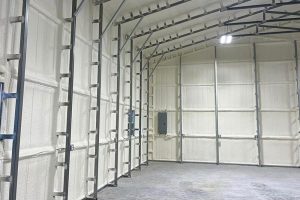
Metal building spray foam insulation
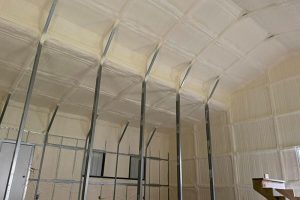
Barndominium spray foam insulation
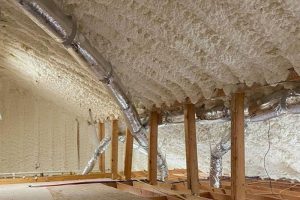
Residential attic spray foam
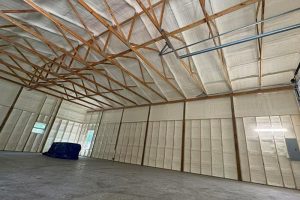
Commercial building insulation
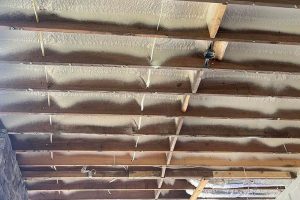
Crawl space spray foam insulation

Garage & shop insulation
Get a Houston spray foam estimate from Weeks
Why Houston's climate demands more than fiberglass
Houston sits in IECC Climate Zone 2A — hot and humid — one of the most demanding insulation environments in the United States. The problem isn’t heat alone. It’s the combination of sustained heat and moisture vapor pressure that creates year-round stress on any building envelope. Fiberglass batts address conductive heat transfer but do nothing to stop air movement or moisture infiltration — the two primary failure modes in Zone 2A construction.
- IECC climate zone
- 2A — Hot/Humid
- Annual cooling season
- 8–9 months
- Avg summer dew point
- 70°F+ (May–Sept)
- Uninsulated attic peak temp
- Up to 140°F
- Attic temp spike vs ambient
- Up to 25% above outdoor
- Primary failure mode
- Moisture infiltration + mold
Spray foam addresses all three insulation failure modes simultaneously: thermal resistance, air infiltration, and vapor drive. Fiberglass addresses only the first. Houston homes with fiberglass in an unsealed attic lose conditioned air continuously through gaps, regardless of the batt R-value rating.
Open-cell vs. closed-cell: Houston application guide
- Open-cell R-value
- R-3.5 to R-3.8 / inch
- Closed-cell R-value
- R-6 to R-7 / inch
- Open-cell vapor permeance
- Permeable — not a vapor barrier
- Closed-cell vapor class
- Class II vapor retarder
- Closed-cell structural benefit
- Adds wall and roof deck rigidity
- Best open-cell use in Houston
- Interior walls — sound, no vapor concern
Houston spray foam cost and payback
Weeks Spray Foam is upfront about pricing. Houston spray foam costs more than fiberglass — and the payback in Houston is stronger than almost any other U.S. market due to the length of the cooling season and the cost of moisture damage prevention.
- Open-cell installed
- $0.44–$0.65 / board ft
- Closed-cell installed
- $1.00–$1.50 / board ft
- Typical Houston attic (2,000 sq ft)
- $2,500–$5,500
- Metal building projects
- Scope dependent — call (936) 433-7046
- Lifetime HVAC energy reduction
- Up to 50%
- Mold remediation cost avoided
- $3,000–$15,000 per event
Want more detail? → Is spray foam worth it in Texas?
Retrofit spray foam for existing Houston homes
The majority of Houston spray foam projects Weeks completes are retrofits. Houston’s large inventory of pre-1980 housing stock and the number of post-Harvey remediated homes make retrofit the dominant use case.
Houston’s inner-loop neighborhoods contain a high concentration of 1920s–1950s pier-and-beam bungalows. Post-Hurricane Harvey (2017), a significant number of Houston homes received expedited remediation insulation that prioritized speed over performance. Both are strong Houston spray foam retrofit candidates.
-
Attic conversion:
Existing insulation removed. Closed-cell sprayed to roof deck. HVAC now operates at ~80°F instead of 140°F. -
Crawl space / pier-and-beam:
Closed-cell to subfloor underside. High-impact Houston retrofit — Heights, Montrose, and inner-loop bungalows. -
Walls during remodel:
Exterior walls treated before drywall re-close. Best window for full envelope treatment in an existing Houston home.
-
Metal buildings:
Retrofit closed-cell for Houston shops, barns, and storage structures with condensation or heat problems. -
Post-Harvey homes:
Kingwood, Atascocita, Meyerland-area homes remediated after 2017. Weeks assesses whether remediation insulation meets current performance standards.
Humidity, moisture, and mold prevention in Houston, TX
- HVAC dehumidification load
- Significantly reduced
- Indoor allergen infiltration
- Reduced with air sealing
- Mold risk in wall assemblies
- Substantially lowered
- Musty odor (crawl space)
- Typically resolved
- Vapor retarder class
- Class II (closed-cell)
- Open-cell at envelope
- Not recommended in Zone 2A
Persistent musty smell? High humidity inside despite running AC? These are crawl space and attic moisture signals. Weeks assesses both before recommending scope. → Call us for a free estimate today
Attic insulation: Conditioned vs. vented
Houston homeowners call Weeks asking about heat. The conversation almost always turns to moisture — because in Zone 2A, moisture infiltration is often the more damaging and expensive long-term problem.
- Vented attic peak temp (Houston)
- Up to 140°F
- Conditioned attic temp
- Tracks living space ~80°F
- HVAC in vented attic
- Operates at 140°F — high stress
- HVAC in conditioned attic
- Operates at ~80°F — normal range
- Duct losses (vented)
- Significant — ducts cross envelope
- Duct losses (conditioned)
- Minimal — ducts inside envelope
HVAC sizing → important for Houston retrofits | After a full Houston spray foam retrofit, an existing HVAC system may be oversized for the reduced thermal load. Oversized systems short-cycle and fail to dehumidify — critical in Houston. Weeks raises this proactively on whole-envelope projects. Tightly sealed homes also need mechanical fresh air — an ERV or controlled intake should be evaluated as part of scope.hese are crawl space and attic moisture signals. Weeks assesses both before recommending scope. → Call us for a free estimate today
Planning Your Insulation Project
Weeks provides written re-entry instructions before every Houston spray foam project. No same-day pricing pressure. Every estimate starts with a site walk. Call (936) 433-7046 to schedule.
- Full attic conversion (2,000 sq ft)
- 1 day typical
- Whole-envelope project
- 2–3 days
- Metal building
- 1–3 days — scope dependent
- Occupant re-entry
- 24 hours post-application
- Pet re-entry
- 24 hours minimum
- Re-entry documentation
- Written — before work begins
How to vet a Houston spray foam contractor
Houston’s post-Harvey and post-2021 freeze markets brought in out-of-state crews and short-term operations. These questions separate established Houston spray foam contractors from transient ones.
Product identification
Name the product and manufacturer. Technical data sheet available on request.
Thickness in writing
Application depth and verification method in the written scope — not verbal.
Texas licensing and insurance
Certificates — not verbal confirmation.
Crew employment status
Employees vs. subcontractors (Quality Control varies significantly).
Verifiable local references
Homeowners in comparable Houston housing stock who will take a call.
HVAC and ventilation discussion
A contractor who quotes without asking about your mechanical system hasn't thought about the full picture.
Houston market red flags → Bids 40%+ below market signal product quality or crew experience gaps. No HVAC discussion before quoting is a building science gap. Same-day decision pressure is a documented pattern from Houston’s post-disaster contractor surges. No written re-entry documentation is a disqualifying condition.
Recent open-cell spray foam projects in North Houston & East Texas
Real installs across the region — pulled directly from our project archive by service type. Every job linked to the full project page with photos and details.
Sorry, we couldn't find any posts. Please try a different search.
Houston neighborhoods and service zones
Weeks Spray Foam is based at 175 Country Wood Dr, Shepherd, TX 77371 — approximately 50 miles north of downtown Houston on US-59. Houston is the southern anchor of a service area extending northeast through Conroe, Humble, Livingston, Cleveland, and into deep East Texas. Crews route through Houston regularly from our Shepherd, TX base.
| Zone | Neighborhoods | Primary project type |
|---|---|---|
| Inner Loop | Heights, Montrose, Midtown, Museum District, EaDo | 1920s–1950s pier-and-beam bungalows — crawl space and attic retrofits |
| West Houston | Memorial, Katy, Cinco Ranch, Sugar Land | Large-footprint residential, Energy Corridor commercial and metal buildings |
| North Houston | The Woodlands, Spring, Tomball, Conroe | Suburban residential plus agricultural and metal building inventory |
| Northeast / East | Humble, Kingwood, Atascocita, Baytown | Post-Harvey remediated homes — flood-zone attic and envelope retrofits |
| Southeast / Bay Area | Pearland, League City, Friendswood, Clear Lake | Newer subdivisions, coastal humidity exposure, attic and crawl space |
Houston Spray Foam Insulation FAQs
How much does spray foam insulation cost in Houston, TX?
The cost of spray foam insulation in the Houston area depends on your project's total square footage, the required thickness (R-value), and whether you need open-cell or closed-cell foam. Generally, open-cell foam ranges from $1.50 to $3.00 per square foot, while heavy-duty closed-cell foam ranges from $2.50 to $4.50+ per square foot. We provide completely free, accurate on-site estimates for homes and commercial shops across the Houston metroplex.
Is open-cell or closed-cell spray foam better for the Houston climate?
Closed-cell spray foam is highly recommended for the Houston and Gulf Coast climate because it acts as a built-in moisture vapor barrier. Houston's intense humidity can penetrate standard insulation, but closed-cell foam rejects water and completely seals metal buildings, barndominiums, and crawl spaces. Open-cell foam is an excellent, cost-effective option for interior walls and rooflines in residential homes where soundproofing and high thermal performance are needed.
How does spray foam insulation lower summer cooling bills in Houston?
Houston summers put immense strain on air conditioning systems. Traditional fiberglass allows hot, humid air to leak into your home or commercial shop. Spray foam expands to fill every crack, crevice, and structural seam, creating an airtight seal. This stops radiant heat transfer from your roofline, allowing your HVAC system to maintain comfortable indoor temperatures while reducing monthly energy consumption by up to 40-50%.
Do you travel to all areas of the greater Houston metroplex?
Yes! While our main shop is based out of Shepherd, TX, our specialized spray foam rigs deploy daily to project sites throughout the greater Houston area. We serve residential and commercial clients from Downtown Houston out to the surrounding suburbs, including Conroe, The Woodlands, Kingwood, Humble, Tomball, and Spring.