Closed-Cell Spray Foam on a Metal Building in Livingston, TX
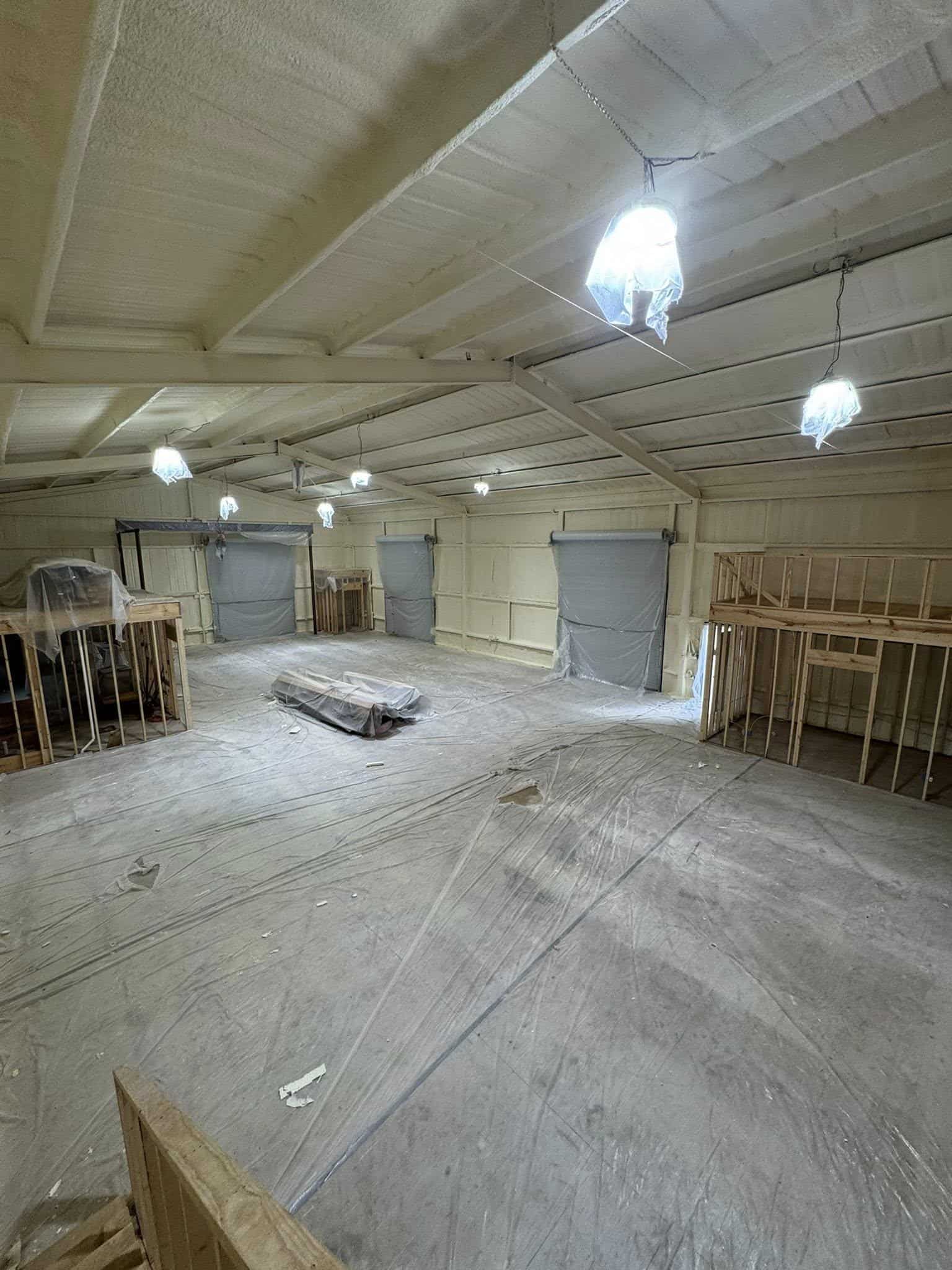
This project came in at the right stage — framing done, roll-up doors roughed in, mezzanine framed up, and a blank canvas of uninsulated corrugated metal ready to go. The owner was building out a barndominium-style metal building in Livingston, Texas and wanted to insulate before the walls got closed up. That’s the right call. Getting spray foam in at the pre-drywall stage means full access to every surface, no trimming around finished work, and the cleanest possible result.
What the Building Needed
Bare metal buildings present three problems that insulation has to solve simultaneously: heat transfer through the roof and walls, condensation forming on cold metal surfaces, and uncontrolled air movement through every gap and seam in the envelope. Fiberglass batts can help with one of those. Closed-cell spray foam handles all three in a single pass.
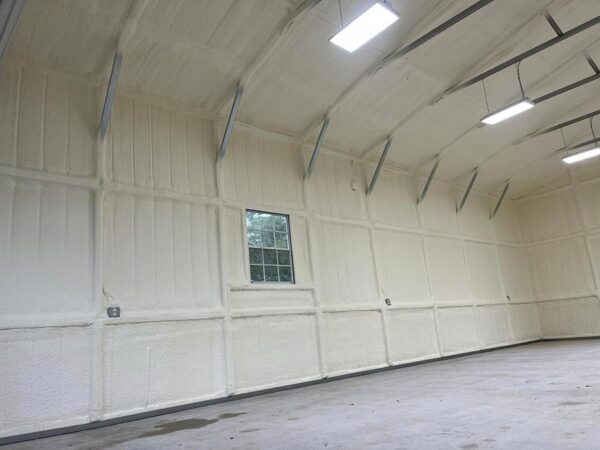
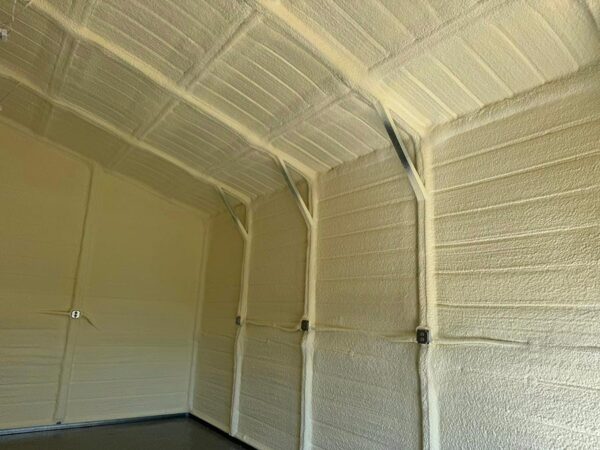
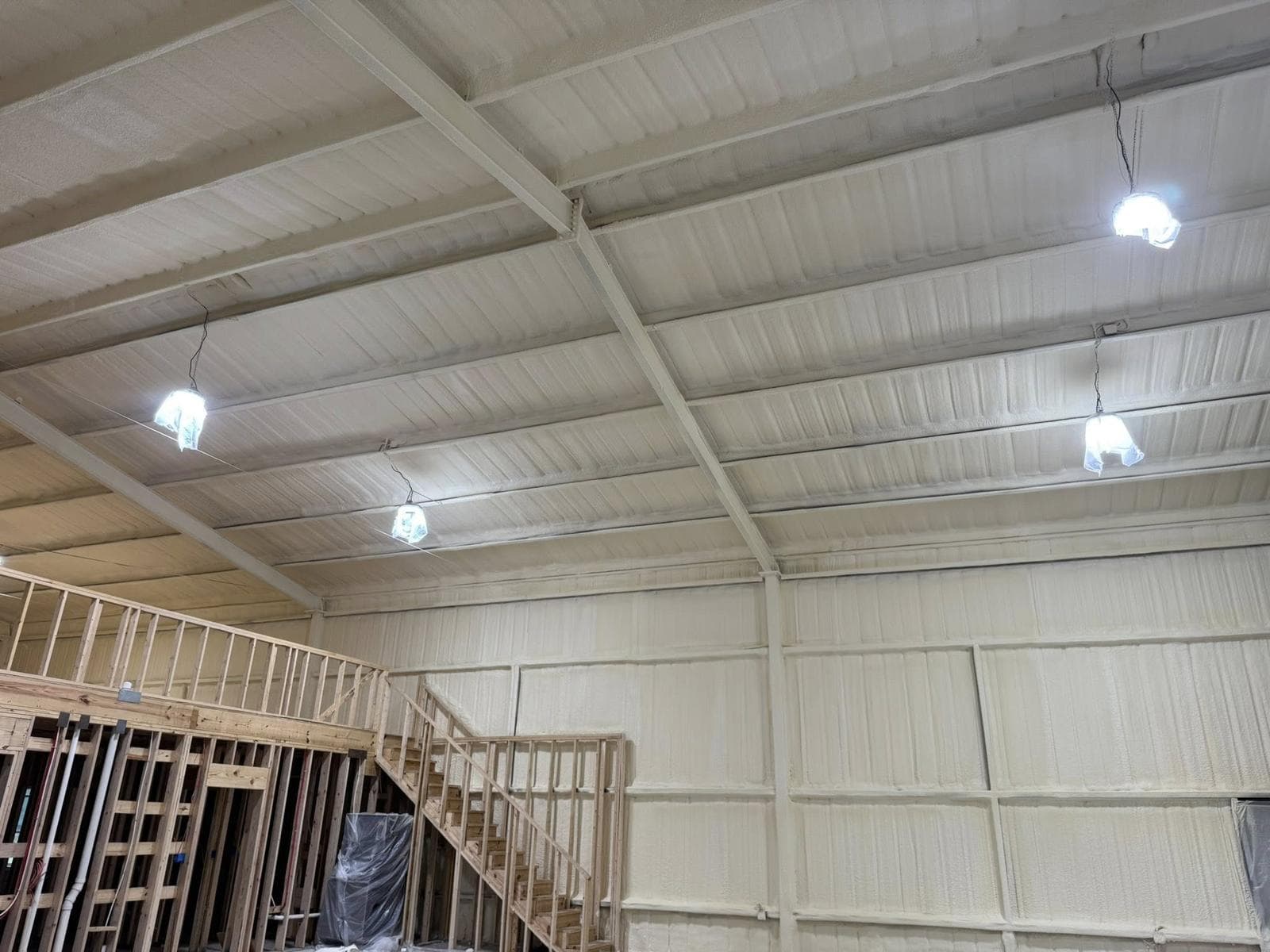
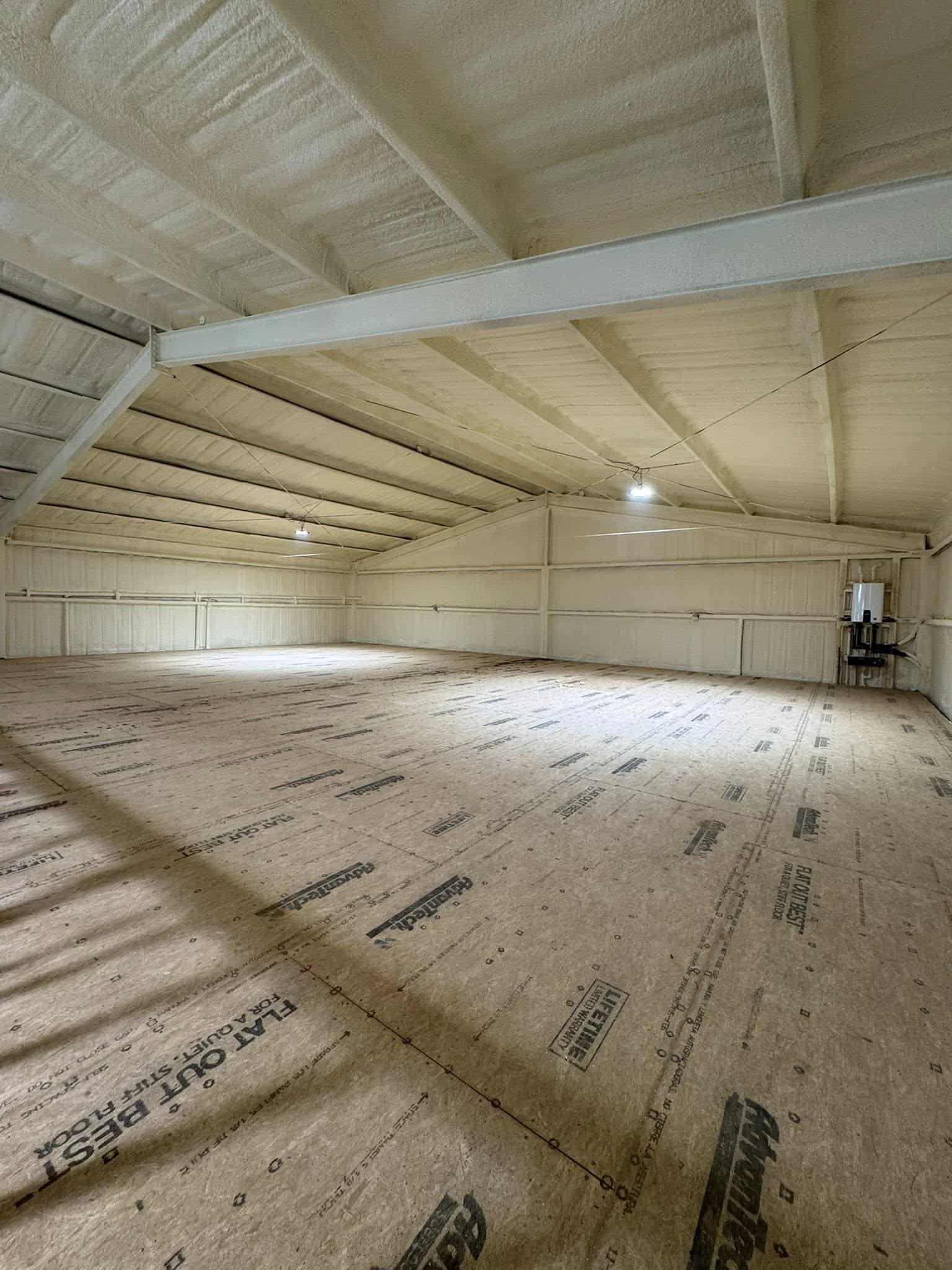
The roof deck was the priority here. A metal roof in East Texas during summer absorbs radiant heat all day and radiates it back into the space for hours after dark. Applying closed-cell foam to the underside of the roof deck breaks that cycle — the foam bonds directly to the metal and creates a rigid thermal barrier between the roof panel and the interior air. The corrugated wall panels got the same treatment, with foam filling the profile at every rib and sealing the building continuously from top to bottom.
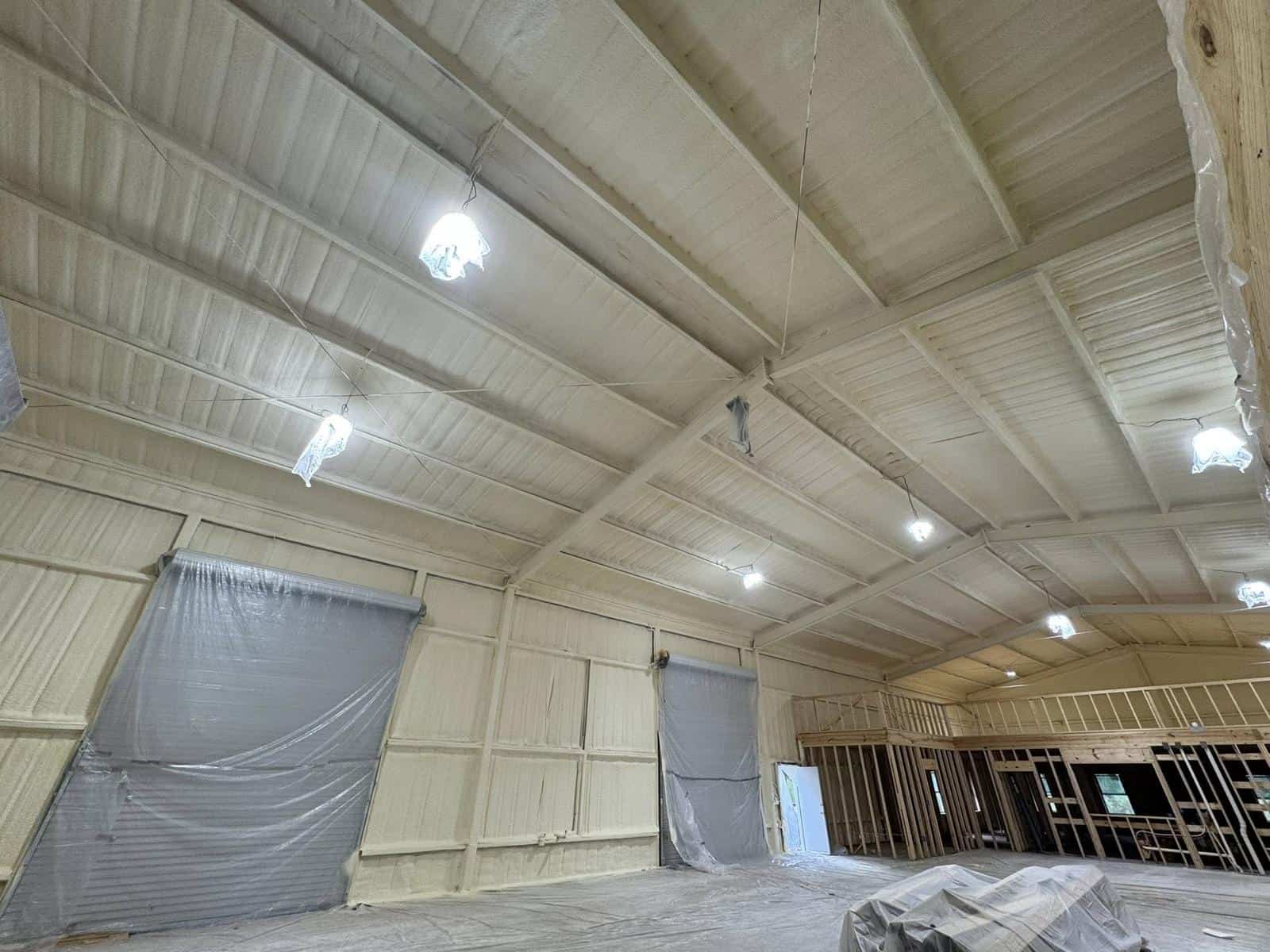
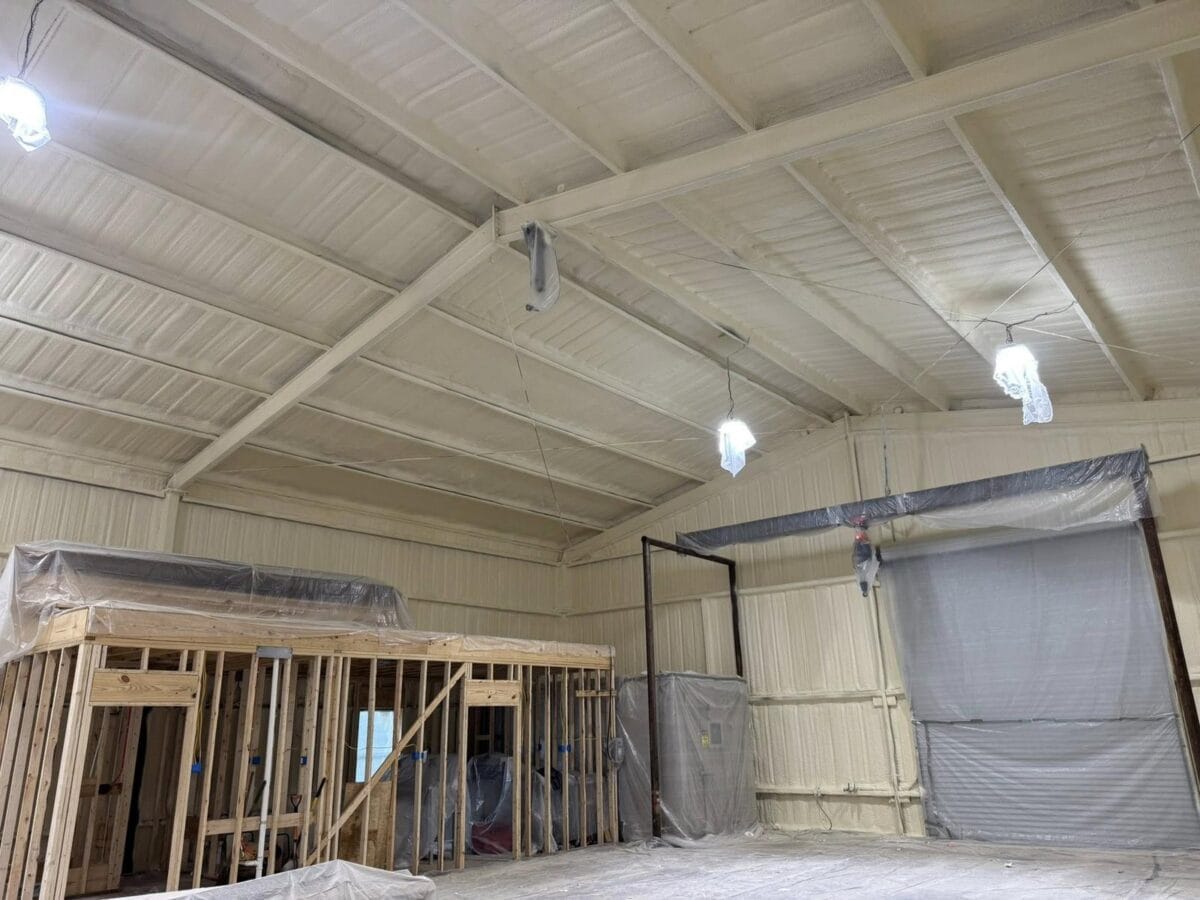
The mezzanine framing and stair structure were already in place, so our crew worked carefully around them — consistent depth, no gaps, full coverage up to and around every framing member. The three roll-up door openings were masked off and protected during the spray, then trimmed clean once the foam cured. You can see those covered openings clearly in the gallery photos.
Why Pre-Drywall Timing Matters
For barndominium builds, scheduling spray foam after framing but before mechanical rough-in is the ideal sequence — and it makes a real difference in how the rest of the project comes together. Your HVAC contractor can size equipment accurately for a properly insulated and air-sealed envelope rather than overbuilding to compensate for unknown losses. That affects equipment cost, duct layout, and the long-term energy cost of the building.
Once drywall goes up, getting proper coverage in a metal building becomes significantly more difficult and expensive. Pre-drywall is the window where you can do it right the first time with no compromises.
The Finished Result
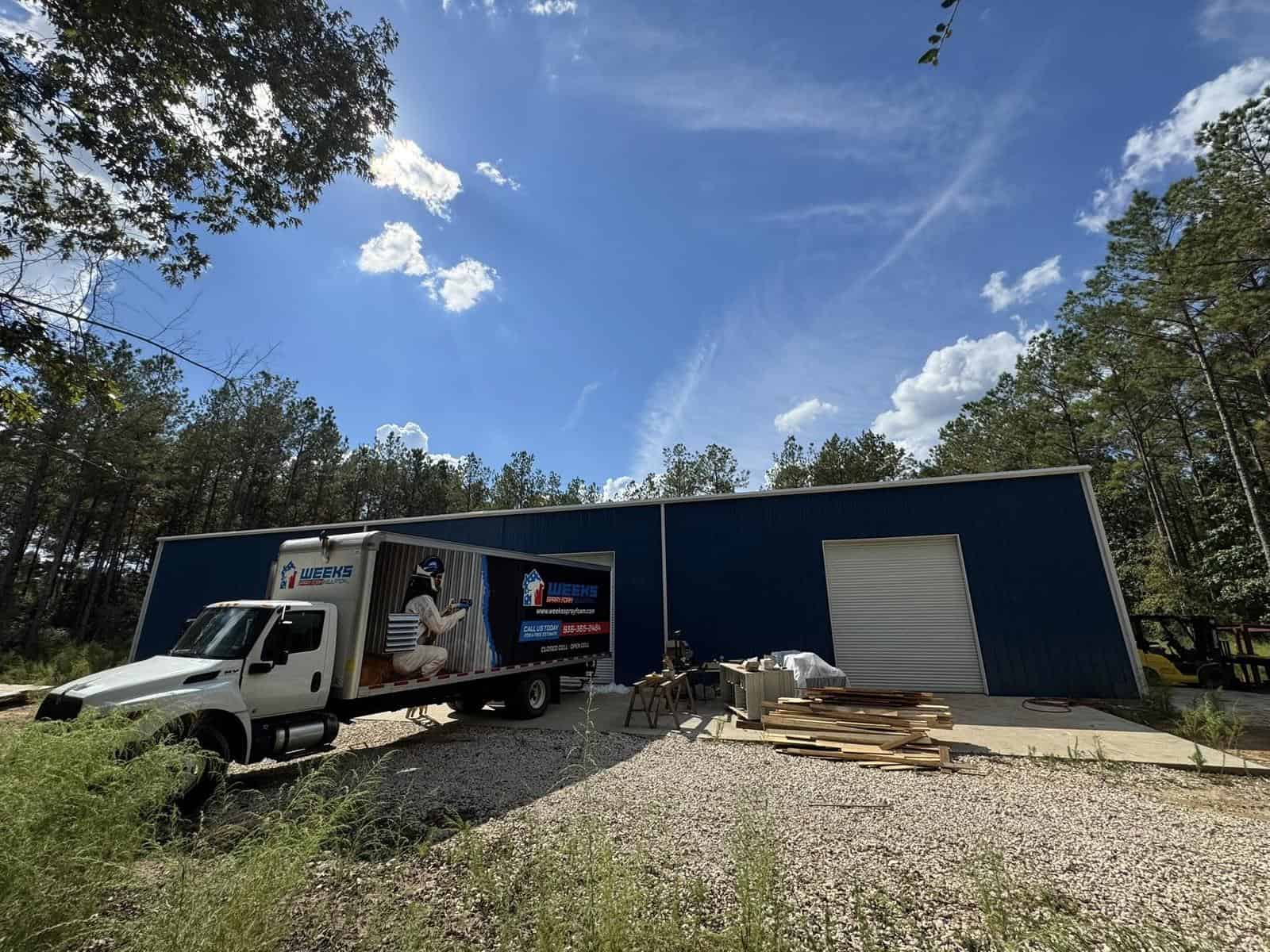
By the time we finished, the entire interior shell was sealed — roof deck, walls, framing bays, continuous closed-cell coverage throughout. The building went from an uninsulated steel box to a thermally controlled envelope ready for whatever direction the owner takes it: living space, workshop, commercial use, or some combination. All seven project photos are in the gallery above showing coverage from multiple angles, including the ceiling close-up, the roll-up door walls, and the exterior shot with our truck on site.
If you have a metal building insulation project at any stage of construction — or an existing building that needs retrofitting — we work throughout East Texas and would be glad to come take a look.
Request a free estimate from Weeks Spray Foam. No pressure, straight answers on what the job takes and what it’ll cost.