
Fiberglass Insulation — North Houston & East Texas
Fiberglass Insulation for North Houston & East Texas Homes and Buildings
Fiberglass batt insulation is the most widely installed insulation product in residential construction — and when used in the right applications, it is a legitimate, code-compliant solution. We install fiberglass insulation for specific applications where it is appropriate, and we give you an honest recommendation when spray foam would serve you significantly better. Licensed contractor, free estimates, and straight answers from the start.
Get A Free Estimate
What fiberglass insulation is — and where it does and does not work in Texas
Fiberglass batt insulation is manufactured glass fibers formed into blankets or batts sized to fit between standard framing members — 2×4 wall studs, 2×6 wall studs, floor joists, and attic rafters. It is the most commonly installed insulation product in U.S. residential construction and has been the default product in new home building for decades.
Fiberglass batts provide thermal resistance — R-2.9 to R-3.8 per inch depending on product type and density — by trapping air within the glass fiber matrix. What they do not provide is air sealing. Air moves freely through and around fiberglass batts at every gap, seam, and penetration in the framing — and that air leakage is responsible for 25–40% of heating and cooling loss in typical homes. In Texas’s extreme climate, the gap between fiberglass’s rated R-value and its real-world performance is particularly significant.
Fiberglass is appropriate in specific applications: interior partition walls where thermal performance is not the primary requirement, floor assemblies above unconditioned space where spray foam is not required, and budget new construction projects where code minimum performance is the goal. It is not appropriate for attic rooflines, metal building applications, crawl spaces, or any assembly where air sealing and moisture control are critical.
We install fiberglass insulation for clients who need it for a specific application, and we always give you a complete picture of how fiberglass compares to spray foam options — including our full spray foam overview at /services/spray-foam-insulation/ — so you can make an informed decision.

Fiberglass batt installation in interior cavities near Corrigan, TX
Where fiberglass insulation is appropriate — and where spray foam is the better choice
We install fiberglass where it makes sense and recommend spray foam where it performs meaningfully better. Here is a straightforward breakdown of which product belongs where in a Texas home or building.
Interior Partition Walls
Fiberglass Is Fine Interior walls between conditioned rooms do not need air sealing or vapor control — they just need some thermal and acoustic separation. Fiberglass batts are appropriate here and deliver adequate performance at lower cost than spray foam for these non-critical assemblies.
Exterior Walls
Spray Foam Performs Better Exterior wall cavities are where air sealing matters most — and where fiberglass's inability to seal air pathways is most costly. Texas homeowners who upgrade from fiberglass to spray foam in exterior walls consistently report meaningful reductions in energy costs. For new construction, spray foam in exterior walls is the higher-performing choice from the start.
Attic Floor Applications
Both Work, Blown-In Is Easier For attic floor applications in existing homes, blown-in fiberglass is actually easier to install than batts and achieves better coverage across the irregular geometry of a typical attic floor. Spray foam on the roofline is the higher-performing option for attic assemblies — conditioning the attic and protecting HVAC equipment in a way that attic floor insulation cannot.
Attic Rooflines
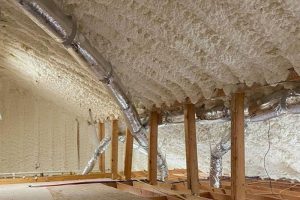
Spray Foam Only Fiberglass batts cannot be effectively installed on attic rooflines. Spray foam is the correct product for conditioned attic roofline applications — it is the only product that can achieve the air seal and thermal performance needed on an irregular, sloped surface.
Metal Buildings and Shops
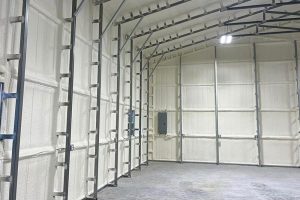
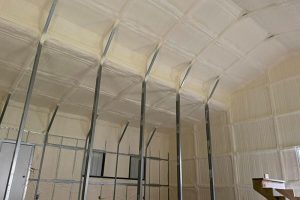
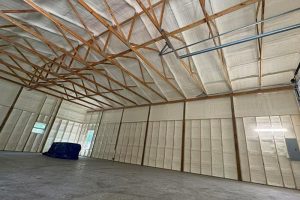
Spray Foam Only Fiberglass batts do not bond to steel, fall down over time in metal building applications, and do nothing about condensation. Closed-cell spray foam is the correct product for any metal building insulation application — shops, barndominiums, metal buildings, and agricultural structures throughout North Houston and East Texas.
Crawl Spaces
Spray Foam Only Fiberglass batts in crawl spaces absorb moisture, fall out of floor joists, and deteriorate rapidly in East Texas's humid conditions. Spray foam is significantly better for crawl space applications and is the product we recommend for all crawl space insulation projects.
Fiberglass insulation vs. spray foam vs. mineral wool — which is right for your Texas project?
Understanding where fiberglass makes sense requires an honest look at how it compares to the alternatives. Here is how fiberglass stacks up against spray foam and mineral wool for common residential applications in North Houston and East Texas.
| Fiberglass Batts | Spray Foam | Mineral Wool | |
|---|---|---|---|
| Upfront cost | Lowest | Higher | Moderate |
| Air sealing | None | Excellent | None |
| R-value per inch | R-2.9–3.8 | R-3.5–7 | R-3.7–4.2 |
| Fire resistance | Moderate | Requires barrier | Excellent |
| Works in metal buildings | No | Yes | No |
| Moisture resistance | Poor | Excellent | Good |
| Interior partition walls | Yes — cost effective | Yes — higher cost | Yes — moderate cost |
Fiberglass insulation applications we install across North Houston & East Texas
We install fiberglass insulation in the applications where it is appropriate — and give you honest guidance when a different product would serve you better. Here are the fiberglass insulation jobs we handle across North Houston and East Texas.
Sound control between rooms

Recent fiberglass insulation projects in North Houston & East Texas
Insulation projects across the region — pulled directly from our project archive. Every job is linked to the full project page with photos, building type, and location details.
Sorry, we couldn't find any posts. Please try a different search.
Why North Houston property owners choose Weeks Spray Foam for open-cell insulation
When you call Weeks for fiberglass insulation, you get an honest assessment — not a contractor who installs whatever you ask for without telling you whether it is the right product. We tell you where fiberglass is appropriate, where spray foam is significantly better, and let you make an informed decision. We install fiberglass correctly in the applications where it belongs and recommend spray foam honestly when it would serve you better.
Licensed & Insured Insulation Contractor
Fully licensed for residential and commercial insulation work throughout Texas.
Honest Product Recommendations
We install fiberglass where it is appropriate and tell you when spray foam is the better investment — not the other way around.
Free Estimates, No Pressure
We assess your project, recommend the right product for each assembly, and give you a clear written estimate before any work begins.
100+ Five-Star Reviews
Trusted by homeowners and builders across North Houston and East Texas for residential and commercial insulation projects.
What customers say about our closed-cell spray foam installations
EXCELLENTTrustindex verifies that the original source of the review is Google. They did a great job good price . Thank youPosted on GoogleTrustindex verifies that the original source of the review is Google. Austin and his crew did a great job on our little barndo guest house! We will definitely use them for future projects.Posted on GoogleTrustindex verifies that the original source of the review is Google. Hands down best in town! Very responsive, great price and great and quick work I would call them and refer my friends!Posted on GoogleTrustindex verifies that the original source of the review is Google. Great work, would recommendPosted on GoogleTrustindex verifies that the original source of the review is Google. Did a great job insulating an add on at our Church "Hillister Assembly of God". I would definitely recommend them.Posted on GoogleTrustindex verifies that the original source of the review is Google. I can’t say enough great things about Weeks Spray Foam! From the very first phone call to the final walkthrough, their team was professional, knowledgeable, and genuinely committed to doing the job right. They took the time to explain the entire process, answered all of my questions, and made sure I felt confident every step of the way. The quality of their work is outstanding — clean, precise, and completed on schedule. You can tell they take real pride in what they do. On top of that, their customer service is second to none. Friendly, responsive, and reliable — exactly what you hope for when hiring a contractor. If you’re looking for spray foam insulation done right, I highly recommend Weeks Spray Foam. You won’t be disappointed!Posted on GoogleTrustindex verifies that the original source of the review is Google. We absolutely love these guys! They spray all of our new builds great customer service short lead times and fast quality workPosted on GoogleTrustindex verifies that the original source of the review is Google. After being screwed around by another spray foam company, I reached out to Weeks and BOOM, 100% professional service, great quality of work and clean up, along with best in class customer service and price! Will certainly have them out again, for my next project!
A straightforward way to get the job done
Fiberglass insulation jobs are typically quick to scope and install — the main job is assessing whether fiberglass is the right product for your specific application before we begin. We give you that assessment upfront.
-
Request a Quote
Tell us about the building, the project type, and where the property is located. -
Review the Job
We look at the scope, building type, and insulation needs so we can recommend the right solution. -
Schedule the Work
We coordinate timing and keep the project moving as efficiently as possible. -
Install the Spray Foam
Our crew completes the work with a focus on quality, consistency, and long-term performance. -
Enjoy a Better-Performing Building
You get a tighter, more comfortable, more energy-efficient space built for Texas conditions.
How much does fiberglass insulation cost in North Houston?
Fiberglass batt insulation typically runs $0.50–$1.00 per square foot of wall or floor area depending on the batt size and assembly configuration. It is the lowest-cost insulation option available for cavity applications. A complete fiberglass installation for exterior walls in a 2,000 square foot new construction home typically falls in the $2,500–$4,500 range. We provide a firm written estimate for every job.
Wall cavity depth
(2x4 vs. 2x6 framing)
Square footage of the assembly
New construction vs. retrofit
Interior partition vs. exterior wall
Number of penetrations and obstacles
Batt type: standard vs. high-density
Fiberglass insulation service areas — North Houston, East Texas & the Lake Livingston region
We install fiberglass insulation throughout North Houston and East Texas. Not sure if we cover your area? Call us at (936) 433-7046.
Fiberglass insulation FAQs — cost, performance & Texas applications
Is fiberglass insulation good enough for a Texas home?
It depends on where it is being used. For interior partition walls between conditioned rooms, fiberglass batts are adequate — they provide thermal and acoustic separation at the lowest cost. For exterior walls, attic assemblies, and any application where air sealing matters, fiberglass is a compromised solution in Texas. The rated R-value of fiberglass assumes no air movement — and fiberglass does nothing to stop air movement through and around the batts. In Texas's extreme climate, that gap between rated and real-world performance is the difference between comfortable and uncomfortable, between reasonable energy bills and high ones.
What R-value does fiberglass insulation provide?
Standard fiberglass batts deliver R-2.9 to R-3.8 per inch depending on product type and density. A 2x4 wall cavity (3.5 inches) filled with standard fiberglass delivers approximately R-13. A 2x6 wall cavity (5.5 inches) delivers approximately R-19 to R-21. These values assume proper installation without compression, gaps, or air movement — conditions that are rarely fully achieved in real construction. High-density fiberglass batts achieve slightly higher values per inch but still do not provide air sealing.
Should I upgrade from fiberglass to spray foam in my existing home?
For exterior walls, spray foam delivers meaningfully better performance — but accessing existing wall cavities in a finished home is disruptive and expensive. The more practical approach for most existing homes is to address the high-impact assemblies first: attic roofline spray foam, crawl space spray foam, and air sealing at the most significant leakage points. These improvements typically deliver more return for less disruption than retrofitting wall insulation. We assess your specific home during a free estimate and recommend the highest-impact improvements for your situation.
Can fiberglass batts be installed in a metal building or shop?
No — fiberglass batts are not appropriate for metal building applications. They do not bond to steel and fall down over time. They do not address condensation — the primary insulation problem in metal buildings — and they perform poorly in the humid Texas environment when exposed to the temperature cycling that metal buildings experience. Closed-cell spray foam is the correct product for any metal building insulation application.
How long does fiberglass insulation last in Texas?
Fiberglass batts in a dry, protected environment can last 15–20 years before needing inspection. In environments with moisture, humidity fluctuations, or pest activity — including crawl spaces, unprotected attic floors, and exterior wall cavities with air leakage — the lifespan is significantly shorter. Fiberglass that has gotten wet loses R-value and can harbor mold. Properly installed in dry interior applications, it provides adequate performance for a reasonable period.
How much does fiberglass insulation cost in North Houston?
Fiberglass batt insulation typically runs $0.50–$1.00 per square foot of wall or floor area. A complete fiberglass installation for exterior walls in a 2,000 square foot new construction home typically falls in the $2,500–$4,500 range. It is significantly less expensive upfront than spray foam — but the energy performance gap in Texas means the long-term cost of ownership is less favorable than the initial price suggests. We give you a clear comparison during your free estimate. Call (936) 433-7046 to get started.
Related Insulation Services
- Open-Cell Spray Foam
- Blown-In Insulation
- Mineral Wool Insulation
- Residential Spray Foam